Let’s be real for a second — sales forecasting has always felt a bit like trying to predict the weather using a damp finger. You look at last quarter’s numbers, squint at your CRM, and hope for the best. But here’s the thing: the best sales teams aren’t guessing anymore. They’re using predictive analytics and, more interestingly, buyer sentiment to see what’s coming. And honestly? It changes everything.
So, what’s the deal with blending cold hard data with the squishy, human stuff like emotion? Well, that’s where the magic happens. Let’s dive in.
Why traditional forecasting is failing you
You know the drill. Your VP asks for next quarter’s forecast. You pull up spreadsheets, maybe a dashboard, and you plug in historical averages. It’s neat. It’s tidy. It’s also… kinda useless.
Here’s why: the past doesn’t always repeat itself. Markets shift. Buyer behavior changes overnight. A competitor drops a new feature, a recession whispers, or a viral tweet changes perception. Old models can’t catch that. They’re like driving using only the rearview mirror.
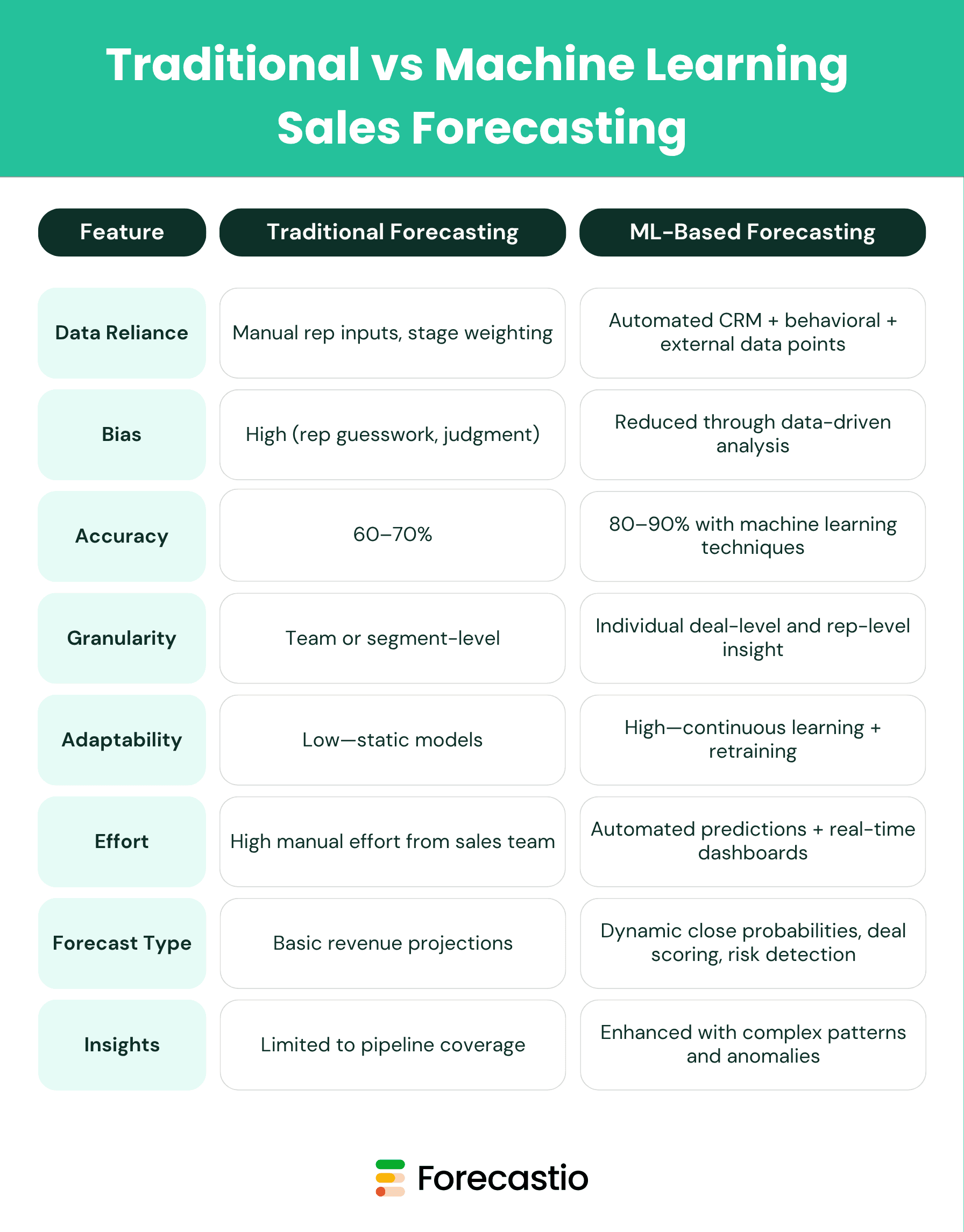
Predictive analytics flips that. It uses machine learning to spot patterns you’d miss — patterns in deal velocity, email open rates, even the time of day a lead clicks a link. But even that’s not enough on its own.
You need the why behind the click. That’s where buyer sentiment comes in.
What is buyer sentiment, really?
Think of buyer sentiment as the emotional temperature of your pipeline. It’s not just “are they interested?” — it’s “are they excited, hesitant, frustrated, or indifferent?”
Sentiment data comes from all over. Emails, call transcripts, social media chatter, chatbot interactions, even the tone of a prospect’s voice during a demo. Natural language processing (NLP) tools can scan these for keywords, tone, and even sarcasm. Sure, it’s not perfect — but it’s getting scarily good.
When you layer sentiment onto predictive models, you stop forecasting just when a deal will close. You start forecasting if it will close — and why.
How sentiment changes the numbers
Imagine two deals in your pipeline. Both have the same deal size, same stage, same timeline. But one prospect’s emails are full of enthusiasm (“This is exactly what we need!”), while the other’s are terse and full of objections (“We’re still evaluating other options”).
Traditional forecasting treats them equally. Predictive analytics with sentiment? It’ll flag the second deal as high-risk. That’s a game-changer.
I’ve seen teams boost forecast accuracy by 30% or more just by adding sentiment scores to their models. That’s not a fluke — that’s pattern recognition at scale.
Building a hybrid forecast model
Alright, so how do you actually do this? You don’t need a PhD in data science. But you do need a few ingredients.
- Clean historical data — Your CRM needs to be, well, not a dumpster fire. Clean up duplicates, standardize stages, and log lost deals honestly.
- Predictive analytics tool — Something like Clari, Gong, or even a custom model in Python. These tools crunch deal velocity, lead source, and engagement metrics.
- Sentiment data feed — Pull from email sentiment analysis, call recording AI, or even survey responses. Tools like Chorus or CallRail can help.
- A feedback loop — Your model should learn from outcomes. Did a deal predicted to close actually close? Feed that back in.
Here’s the tricky part: blending them. You can’t just average a sentiment score with a probability score. You need a weighting system. For example, if sentiment is strongly negative, it might override a high probability. If sentiment is neutral but engagement is high, maybe the deal is just slow — not dead.
It’s messy. But it’s real.
The role of timing and context
One thing I’ve learned? Sentiment isn’t static. A prospect might be excited one week, then ghost you after a budget meeting. Your model needs to update in near real-time.
That’s where predictive analytics shines — it can detect shifts faster than a human. Say a buyer’s email tone goes from warm to cold. The model adjusts the forecast immediately. No waiting for the weekly pipeline review.
And context matters. A negative sentiment from a procurement officer might just be their personality — not a deal killer. But a negative sentiment from a champion? Red flag. Good models learn to differentiate.
Real-world example: SaaS company turns it around
I worked with a B2B SaaS company last year. They were missing forecast by 40% every quarter. Classic problem — reps were optimistic, and data was stale.
We integrated a sentiment layer from their call recordings. Turns out, deals where the buyer used phrases like “we’ll think about it” or “not right now” had a 70% churn rate within 30 days. The predictive model started flagging those deals as low-probability, even if the rep swore they were close.
Within two quarters, forecast accuracy hit 85%. Not perfect — but way better than guessing.
Common pitfalls (and how to dodge them)
Look, this isn’t a silver bullet. Here are a few traps I’ve seen teams fall into:
- Over-relying on sentiment — A happy buyer can still ghost you if their budget gets cut. Sentiment is a signal, not a guarantee.
- Ignoring data quality — Garbage in, garbage out. If your CRM is a mess, your predictive model will be too.
- Forgetting the human element — Models can’t read a room. Sometimes a deal stalls because of internal politics — sentiment tools might miss that.
- Not updating models — Markets change. Your model should too. Retrain quarterly at minimum.
And one more thing — don’t let the tech replace intuition. Use it to inform, not dictate.
Tools and tech stack ideas
If you’re curious about what’s out there, here’s a quick snapshot of tools that combine predictive analytics and sentiment:
| Tool | Focus | Sentiment capability |
|---|---|---|
| Clari | Revenue forecasting | Basic email and call sentiment |
| Gong | Revenue intelligence | Deep call sentiment analysis |
| Chorus (ZoomInfo) | Conversation analytics | Keyword and tone detection |
| People.ai | Activity tracking | Engagement sentiment scoring |
| Custom ML (e.g., Python + NLP) | Full control | Build your own sentiment model |
Honestly, you don’t need the most expensive tool. Start with one that integrates with your CRM and go from there.
Making it actionable tomorrow
You don’t have to overhaul everything. Try this: pick five deals in your pipeline. Read the last five emails from each. Rate the sentiment as positive, neutral, or negative. Now compare that to your current forecast probability.
Chances are, you’ll spot a few mismatches. That’s your low-hanging fruit. Start there.
Next, set up a simple sentiment tag in your CRM. Have reps flag deals where the buyer sounds hesitant or excited. Over time, you’ll build a dataset that can feed into a predictive model.
It’s not about perfection. It’s about getting a little less wrong every quarter.
The bigger picture
Sales forecasting has always been part art, part science. Predictive analytics gives you the science — the math, the patterns, the probabilities. Buyer sentiment brings back the art — the nuance, the emotion, the human truth.
Together, they don’t just predict the future. They help you shape it. And honestly? That’s a pretty powerful place to be.
So stop guessing. Start listening — to the data, and to the people behind it.